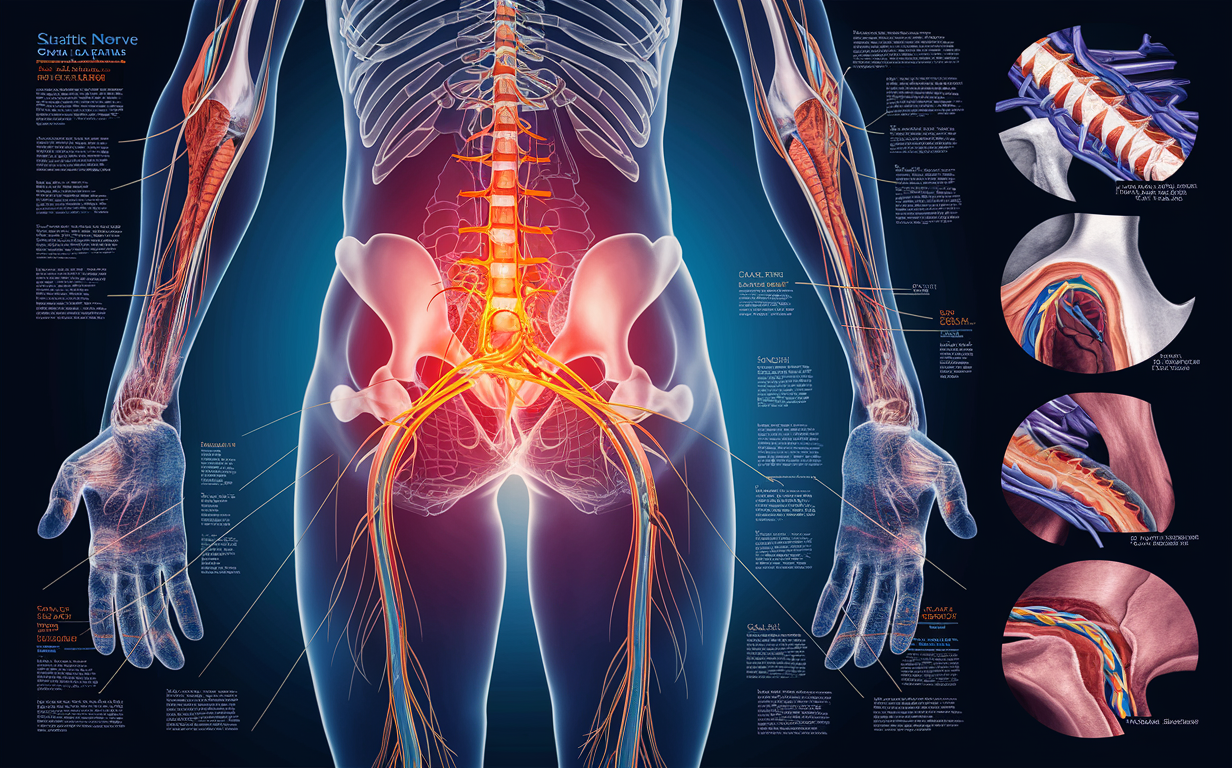
Sciatica is a common term referring to pain that radiates along the path of the sciatic nerve. This nerve runs from the lower back, through the hips and buttocks, and down each leg. It is often associated with conditions such as herniated discs or spinal stenosis. Here, we will answer your questions and provide detailed insights into understanding sciatica.
Sciatica is nerve pain originating in the lower back and extending down the leg.
Common causes include herniated discs, spinal stenosis, and piriformis syndrome.
Symptoms range from mild discomfort to severe pain, tingling, and muscle weakness.
Treatments vary from non-invasive options like physiotherapy and chiropractic care to surgical interventions.
Preventive measures include maintaining a healthy weight, regular exercise, and practicing good posture.
Causes of Sciatica
Sciatica occurs when the sciatic nerve is pinched, which can result from various factors:
Common Causes
Herniated Disc: When a disc in the spine presses against the sciatic nerve.
Spinal Stenosis: Narrowing of the spinal canal in the lower back.
Piriformis Syndrome: The piriformis muscle irritates the sciatic nerve.
Degenerative Disc Disease: Age-related wear and tear on the spinal discs.
Less Common Causes
Pregnancy: Increased body weight can put pressure on the sciatic nerve.
Muscle Spasms: Can pinch the sciatic nerve.
Trauma or Injury: To the lower back or spine.
Symptoms of Sciatica
Sciatica symptoms can vary widely and range from mild to severe. Common signs include:
Pain
Sharp, shooting pain in the lower back, buttocks, and down one leg.
Burning sensation or electric shock-like pain.
Neurological Symptoms
Numbness or weakness in the leg or foot.
Tingling sensations (“pins and needles”).
Movement Issues
Difficulty moving or controlling the leg.
Worsening symptoms with prolonged sitting or standing.
Diagnosis of Sciatica
Diagnosing sciatica typically involves a combination of medical history review and physical examination. Diagnostic tests may include:
Physical Examination
Examination of reflexes and muscle strength.
Testing for pain response with specific movements.
Imaging Tests
X-rays: To check for bone abnormalities.
MRI or CT scans: To obtain detailed images of the spine and identify herniated discs or spinal stenosis.
Electromyography (EMG): Measures electrical activity in muscles and nerves.
Treatment Options for Sciatica
The treatment for sciatica depends on the underlying cause and severity of the symptoms. Here are some common approaches:
Non-Surgical Treatments
Chiropractic Care: Adjustments to relieve nerve pressure.
Physical Therapy: Exercises to strengthen muscles and improve flexibility.
Medications: Pain relievers, anti-inflammatory drugs, and muscle relaxants.
Surgical Treatments
Microdiscectomy: Removal of a herniated disc.
Laminectomy: Removal of part of the vertebra to relieve pressure on the nerve.
Home Remedies and Lifestyle Changes
Applying ice packs or heat therapy.
Regular exercise to strengthen the back and improve posture.
Stretching exercises targeted at the lower back and legs.
Preventive Strategies
Preventing sciatica involves adopting healthy habits and making lifestyle changes:
Maintain a Healthy Weight
Balanced diet: Ensure you eat nutritious foods.
Regular exercise: Keep your weight in check and strengthen your core muscles.
Practice Good Posture
Ergonomic furniture: Use chairs that support your lower back.
Proper lifting techniques: Bend your knees, not your waist.
Regular Physical Activity
Engage in activities like walking, swimming, or yoga.
Focus on exercises that improve your core strength and flexibility.
Real-Life Experiences
Patients often have unique experiences with sciatica. Here are a couple of stories:
Tavone’s Journey
Tavone experienced chronic back pain that affected his daily activities. After seeking treatment at Yentz Family Chiropractic, he noticed significant improvements. The pain subsided, and his mobility improved, allowing him to lead a more comfortable life.
Stephanie’s Transformation
Stephanie struggled with overall health issues and chronic pain. The welcoming environment and personalized care at Yentz Family Chiropractic helped her regain her health. She now feels like part of the family and is on the path to a healthier lifestyle.
Differences in Sciatica Causes and Symptoms
Common Causes
Less Common Causes
Herniated Disc
Pregnancy
Spinal Stenosis
Muscle Spasms
Piriformis Syndrome
Trauma or Injury
Common Symptoms
Less Common Symptoms
Sharp, shooting pain
Swelling in leg or ankle
Burning sensation
Fever with back pain
Numbness/weakness
Incontinence
Managing Pain at Home
Implementing specific home care strategies can help manage sciatica pain:
Stay Active: Prolonged inactivity can worsen symptoms.
Stretch Regularly: Focus on lower back and leg muscles.
Pain Management: Use over-the-counter pain relievers and muscle relaxants.
Supportive Footwear: Avoid high heels and wear comfortable shoes.
Chiropractic Care and Sciatica
Chiropractic care can be an effective treatment for sciatica. At Yentz Family Chiropractic, we focus on:
Personalized Treatment Plans
Initial Assessment: Comprehensive examination and diagnostic tests.
Customized Adjustments: Tailored to individual needs to relieve nerve pressure.
Additional Therapies
Nutritional Coaching: Ensuring a balanced diet to support overall health.
Softwave Therapy: Non-invasive treatment to promote healing and reduce inflammation.
Importance of Early Intervention
Addressing sciatica symptoms early can prevent worsening conditions. If you experience any of the following, seek medical attention promptly:
Severe pain that does not improve with self-care.
Sudden, severe pain in the lower back or leg combined with numbness or muscle weakness.
Pain following an injury, such as a traffic accident.
Trouble controlling your bladder or bowels.
Benefits of Chiropractic Care for Sciatica
Chiropractic care provides several benefits:
Non-invasive: Avoids the need for surgery.
Holistic Approach: Addresses overall health and wellness.
Pain Relief: Effective in reducing pain and improving mobility.
Chiropractic Techniques for Sciatica
Spinal Manipulation: Adjustments to correct alignment and relieve nerve pressure.
Mobilization: Gentle movements to improve range of motion.
Therapeutic Exercises: Exercises to strengthen supporting muscles.
Frequently Asked Questions
Can sciatica be prevented?
Yes, adopting a healthy lifestyle, maintaining good posture, and regular exercise can help prevent sciatica.
How long does sciatica last?
Sciatica can vary from a few weeks to several months, depending on the cause and treatment.
Is chiropractic care safe for sciatica?
Yes, chiropractic care is generally considered safe and effective for treating sciatica.
What activities should I avoid if I have sciatica?
Avoid prolonged sitting, heavy lifting, and high-impact activities that can strain your lower back.
When should I see a chiropractor for sciatica?
If you are experiencing persistent or severe pain, numbness, or difficulty moving, it is advisable to consult a chiropractor.
Managing Sciatica
Early Intervention: Seek treatment early to prevent worsening symptoms.
Regular Exercise: Engage in activities that strengthen your back and improve flexibility.
Chiropractic Care: Consider non-invasive treatments for effective pain relief and improved mobility.
At Yentz Family Chiropractic, we are dedicated to helping you achieve optimal health and wellness. If you are experiencing sciatica symptoms, don’t hesitate to reach out to our experienced team for personalized care and support.
Request an Appointment
Contact us today to schedule your appointment and take the first step towards a pain-free life. Visit our website at Yentz Family Chiropractic or call us at (262) 379-8801.
By understanding sciatica and exploring the available treatment options, you can take control of your health and improve your quality of life.
Why Patients in Germantown Wisconsin Choose Yentz Family Chiropractic?
Hello my name is tavone and I've been going to Yentz Family Chiropractic for almost 2 months now when I 1st started I had Chronic back pains every-time I walked, even getting out of bed every morning was difficult & I'm under 30 now that I've been seeing dr Karl I have no more back pains no more nerve pains I don't walk with a limp anymore I'm more comfortable and relieved of pain!
Tavone Hunt
Client
They are very welcoming and helpful. They work with you to better your overall health. Very clean and friendly environment. They are like family. Overall I am feeling healthier and becoming a healthier me.
Stephanie Burch
Client
I cannot say enough great things about the incredibly friendly, caring and thoughtful staff at YFC! My experience has been nothing but the best improving my health starting with my spine! Thank you so much!